Forensic image integrity

Catch manipulated figures before they enter the record.

A multi-layer forensic pipeline and an AI verification layer examine any figure or full-paper PDF, then deliver an evidence report worthy of the permanent record — emailed and kept in your dashboard.

Your manuscripts are never used for AI training · deleted on request
Copy-move duplication overlay — matched regions across basal and osteo micrograph panels
Panel reuse — duplicated Day-7 SEM micrographs flagged
Plate vi · copy-move overlay — 8 regions matched across panels
¹Copy-move duplication · 96% — eight regions reproduce across the basal/osteo fields.
Try it — no signup

Drop a figure. Watch it light up.

The real pixel-forensics detector runs right here, on one image — no account, no card. Whole-PDF scanning, cross-figure reuse and the AI checks are a free signup away.

Drop a figure image here, or
PNG or JPG · up to 12 MB · we don't store it
— or —
The cost of a missed figure

Image manipulation is the single largest driver of retraction in science — and most of it is found only after publication, when the correction can no longer be made in proof.

I.
A duplicated panel can unwrite a career.
Retraction notices are permanent and public.
II.
Manual checking doesn't scale.
Reviewers can't screen every panel by eye.
III.
Screen it first, and it never happens.
Catch it in draft — keep your name clean.
How it works

Submit once. The rest is automatic.

No spinner to watch — the report comes to you by email and is kept on your shelf.

Ch. I

Submit a figure or paper

Image or full PDF. Every panel is segmented and gel and blot lanes are aligned automatically.

Ch. II

Six layers examine it

Copy-move, splice, noise and plot layers run in parallel, fused into ranked findings — each confirmed by AI verification.

Ch. III

An evidence report, bound

A labeled report — shareable, exportable as PDF, and kept in your dashboard for the record.

What we check

The integrity checks reviewers wish they had

Catalogue · 6 layers
L·01

Copy-move duplication

Duplicated, rotated or scaled regions found across a paper’s panels.

L·02

Western-blot & splice

Lane-aware band matching and noise-boundary analysis catch spliced gels.

L·03

Plot & chart authenticity

Impossible error bars, duplicated points and fabricated trends.

L·04

AI verification layer

Confirms each flag and writes a plain-language verdict for editors.

L·05

Cross-figure reuse

Detects panels duplicated across different figures in the same paper.

L·06

Code & reference checks

Compare code to sources; flag invalid refs and AI-generated text.

For journals & publishers

Screening inside your editorial workflow.

A single API plugs G.O.A.T Peer into your submission system — every manuscript screened at intake, the report posted back automatically.

Intake

Submit by API or inbox

Async submission with a webhook callback — no reviewer lifting required.

Screen

Structured report back

JSON plus a human-readable PDF per submission, with configurable flag thresholds.

Route

Desk-reject routing

Flagged manuscripts route to your integrity desk; SSO, audit log and data residency.

Book a screening pilot
See it work

Every flag comes with the evidence.

Not a score in a vacuum — the matched regions, the flicker that makes a duplicate undeniable, and the line-by-line token trail behind a plagiarism call.
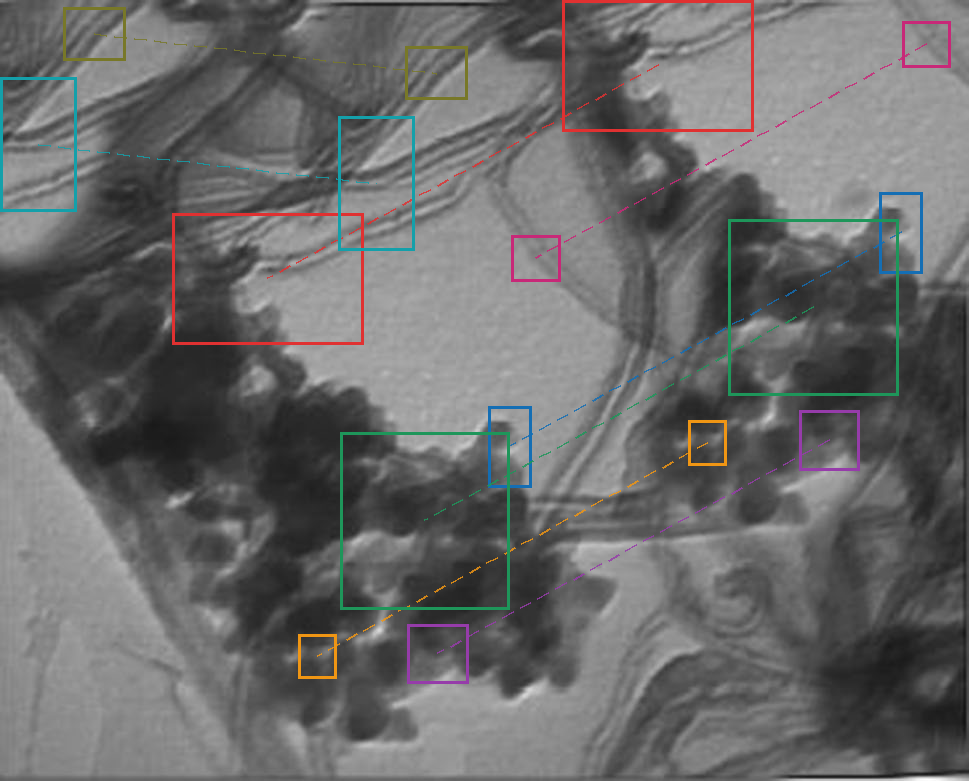
Analysed TEM micrograph with eight matched copy-move regions boxed in colour and joined by dashed lines
Copy-move & clone detection

Duplicated regions are boxed, colour-paired and joined, so you see at a glance which panel was reused where — each with a likelihood you can filter on.
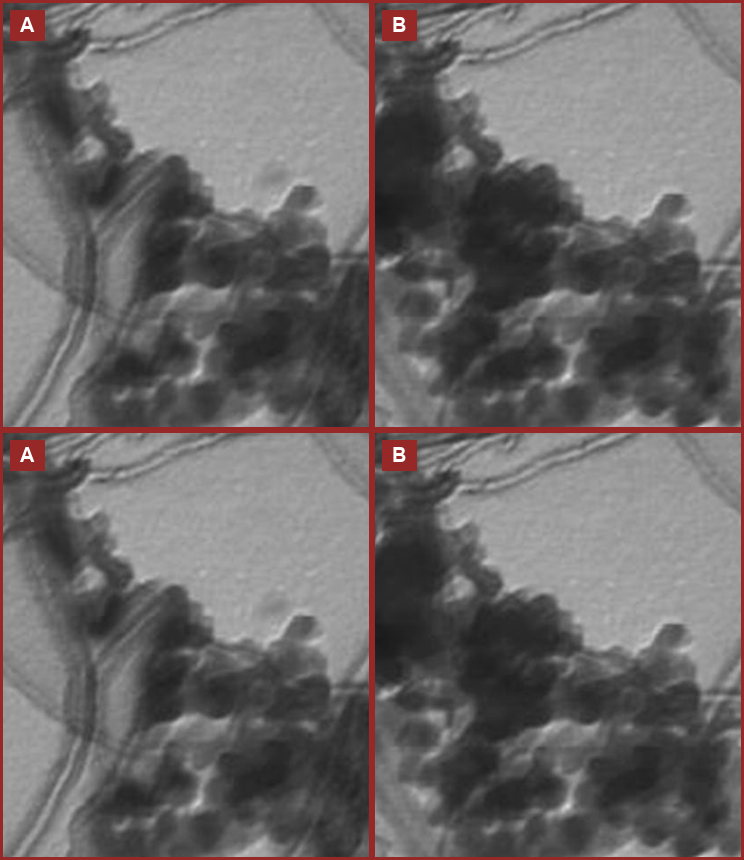
Animation flicking between the two duplicated regions of the micrograph — the particles stay fixed, showing they are the same field
The flicker test

The two matched regions, aligned and flicked back and forth. The particles don’t move — it’s the same field of particles copied to two places in the figure.
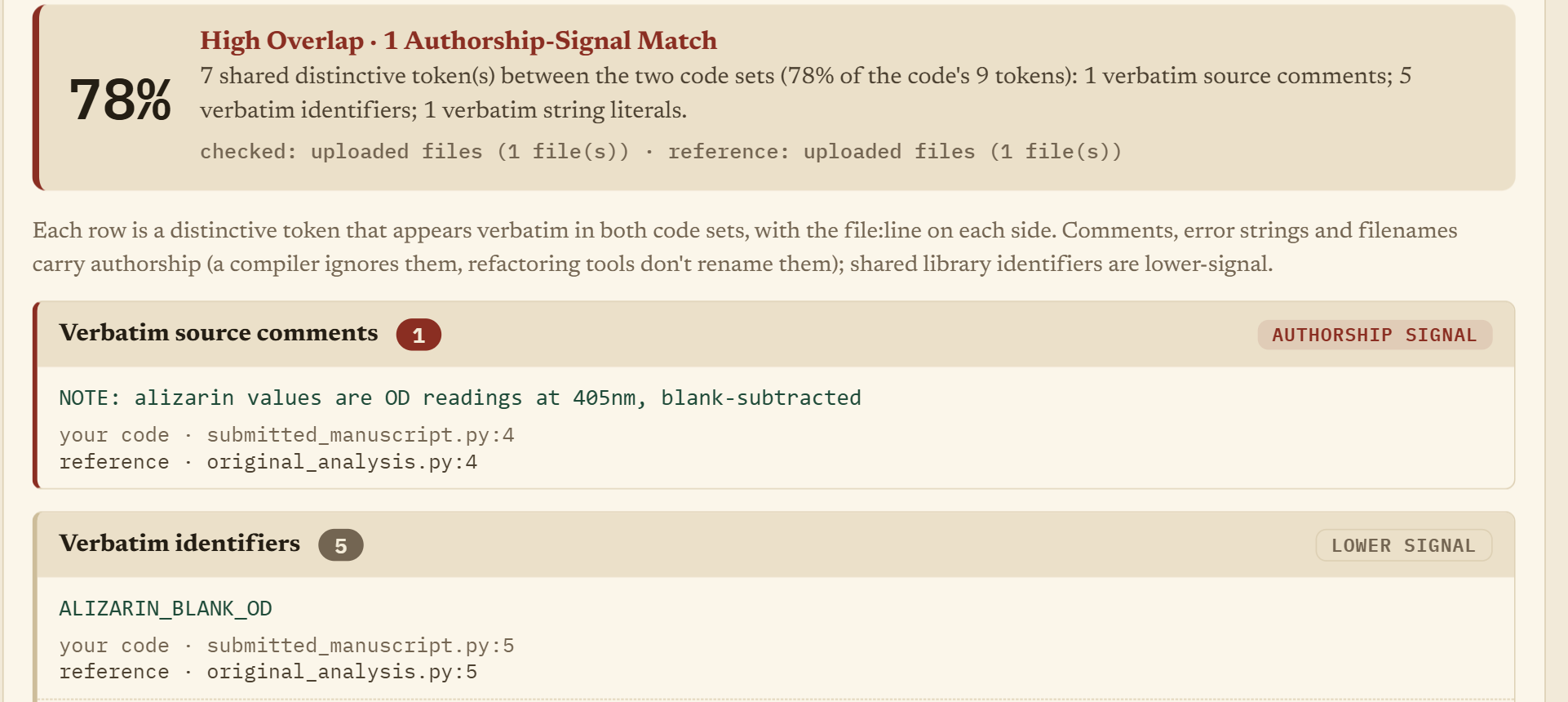
Code comparison result showing 78 percent overlap, with a verbatim comment and shared identifiers as evidence
Code plagiarism check

Compare a paper’s code against any reference — scripts, a .zip, or a GitHub link. Renaming the functions doesn’t help: the verbatim comment and the copied error string still carry authorship, and every match is shown with its file and line on both sides.

Whole-PDF articlesFigures extracted, cross-figure reuse checked, findings boxed on the original pages.
Integrity reportThe article text read for inconsistencies, with the flagged sentence quoted back.
Figure reviewDoes each figure agree with its caption and the paper’s own numbers? The working is shown.
Reference checkEvery citation verified against CrossRef — bad DOIs, wrong years, phantom papers.
AI-generated panelsScreened for synthetic imagery, with an expert on call for a human verdict.
Three ways in

Start free. Add the AI when you need it.

Every plan runs the same forensic engine. What changes is how much of it you point at a paper.

Alpine
The full forensic detector — every check that runs on the figures.
Freeforever
Unlimited image scans · no card
  • Upload images and whole PDFs — figure extraction, cross-figure reuse, PDF view
  • Copy-move & clone detection, across panels
  • Western-blot lane & band reuse
  • Plot splice & line-width checks
  • Image-manipulation flag — retouching, splicing, re-saves
  • Deep copy-move & dense matching
  • AI-generated figure screening
  • Dashboard history, replayable in full
  • The AI checks
Start free
Mountain
Whole articles, every AI check, expert backup.
$49.99/month
Everything in Alpine, unlimited · AI token allowance
  • Everything in Alpine, unlimited
  • GoatBot Scan — AI false-positive filter
  • Integrity report — incl. circular reasoning & study-design flaws
  • Figure review — every figure checked against its caption, the stated parameters and the paper’s own numbers
  • AI plot-authenticity scan
  • Code check: code↔article, AI-generated code, plagiarism
  • Reference verification against CrossRef
  • Elite support — request expert human identification of AI-generated duplications
Get Mountain
Enterprise
For institutions, publishers & integrity offices.
Custom
Scoped with our team
  • Everything in Mountain
  • Bulk / corpus screening across many papers
  • Detector tuning for your figure types
  • SSO, on-premise, data-retention controls
  • Priority support & a named contact
Contact sales
Pay as you go is available on Mountain only, at $15 per scan. Alpine is a subscription; Enterprise is scoped with our team.
Which plan do I actually need?

Alpine is free and runs the whole forensic detector — figures or full-paper PDFs, every check that works on the images themselves. Mountain adds the AI layer: it verifies each flag to strip false positives, reads the article text, and checks the code and the references.

What does the AI layer add?

It verifies each flag to strip false positives, reads the article text for integrity problems (including circular reasoning and study-design flaws), and checks the code and the references. The forensic detection itself — every check on the figures — is on Alpine too.

What is one “scan”?

One paper, put through the full Mountain analysis — every figure, every AI check — for $15, with no subscription. Useful when you have a single manuscript in front of you rather than a steady stream.

Do you train on my manuscripts?

No. Your uploads are never used to train models, and they're deleted on request. Enterprise adds on-premise deployment and explicit data-retention controls if that has to be contractual.

§

A duplicated panel caught in review costs an afternoon.
The same panel caught after publication costs the paper.

Your manuscripts are never used for AI training · deleted on request

Protect the record.

Alpine is free. Mountain is $49.99 a month, or $15 for a single scan. The report comes to you.

Analyze a paper